

Economic Snapshot – March 2026
This March economic shapshot article is prepared by Michael Furey, Principal of Delta Research & Advisory, on behalf of the HPartners Group. Summary Chart 1 Negative returns everywhere … except an obvious one What Happened Last Month? Markets & Economy Outlook Major Market Indicators Source: Morningstar, Trading Economics, Reserve Bank of Australia Market Expectations of…

This March economic shapshot article is prepared by Michael Furey, Principal of Delta Research & Advisory, on behalf of the HPartners Group.
Summary
- USA and Israel attack Iran, resulting in massive energy price spikes and shortages as Iran has shows it doesn’t really need nuclear weapons as it controls a high proportion of the world’s energy supply via geography.
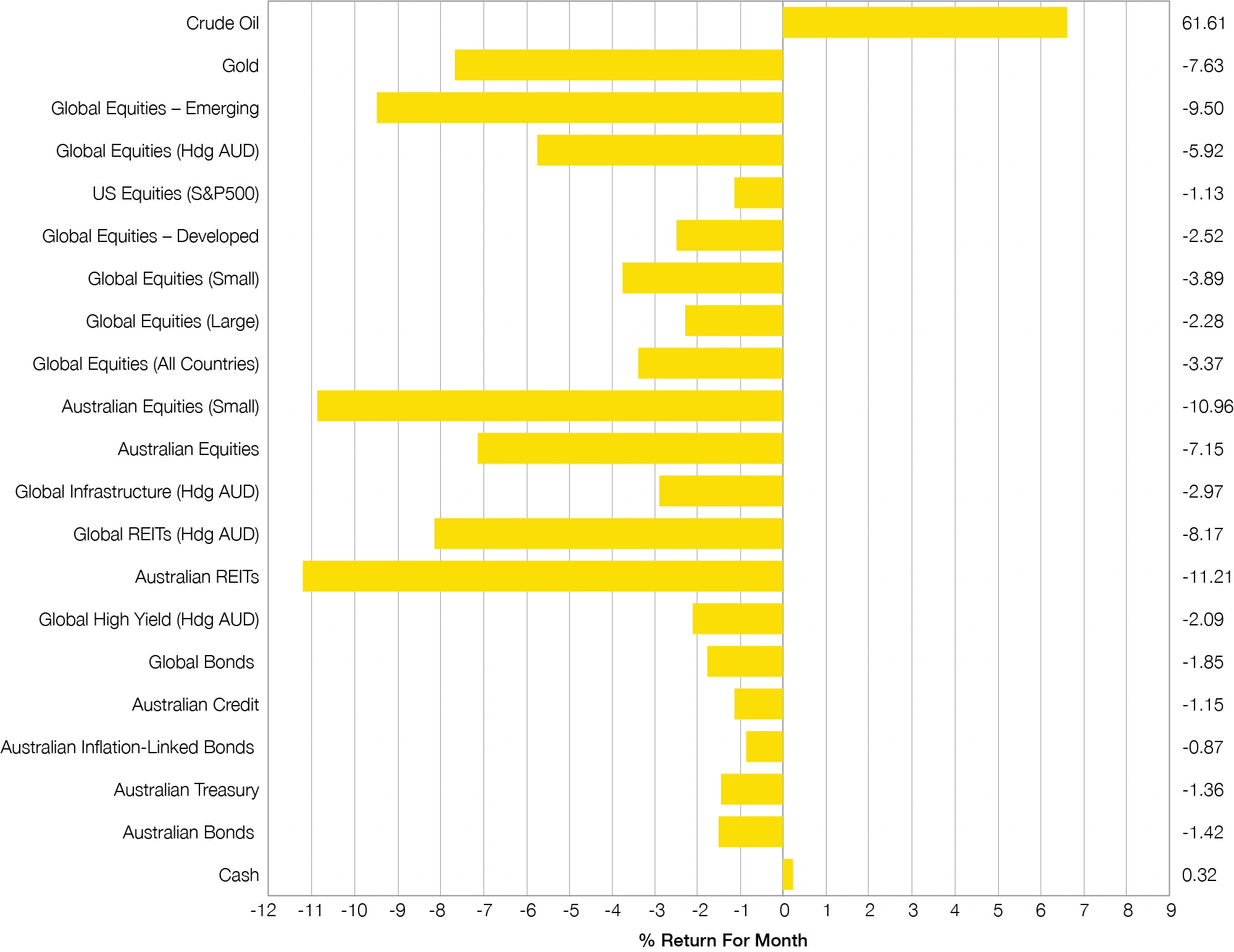
- As Chart 1 below shows, all markets, except Oil and Cash, declined over March, including the previous market-darling, Gold, which may not always be the market hedge many believe.
- Economically, the high energy prices will lead to higher goods prices, therefore higher inflation, and this may keep interest rates higher than previously expected both in Australia and around the world. That said, economic forecasts for the world are continued positive economic growth (including Australia), although it likely comes with an expectation the war will resolve sooner than later (meaning energy prices don’t persist too high for too long).
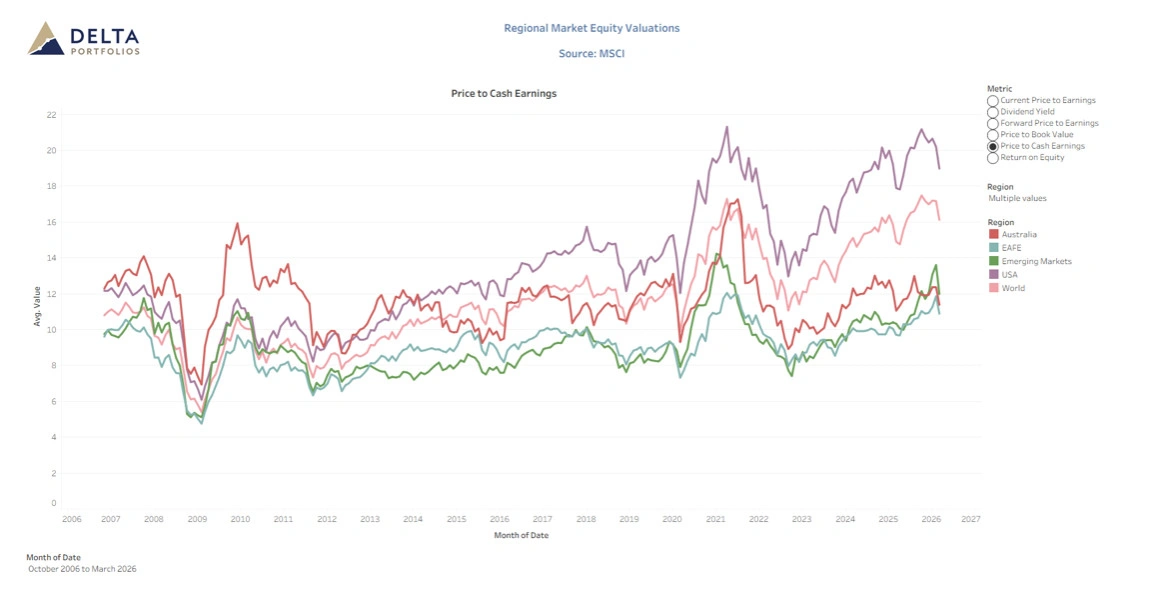
- Our core investment message remains despite persistent downside risks from high sharemarket valuation in USA and the current war(s). This means disciplined risk management rather than aggressive positioning changes. Shares continue to offer an attractive risk premium in specific markets, as do conservative bonds, but returns may be challenged from short term volatility. Avoiding panic (selling) decisions continues to be a crucial investment issue today for long-term investors.
Chart 1
Negative returns everywhere … except an obvious one
What Happened Last Month?
Markets & Economy
- Middle East tensions near maximised during March as USA and Israel attacked Iran, Iran retaliated by bombing Middle Eastern USA allies, and closing the Hormoz Strait resulting in a reduction in global oil supply and massive increases in energy prices. The global oil price benchmark, Brent, finished the month over $100USD per barrel which is an increase of more than 30% from the end of February.
At the time of writing, there is a ceasefire which has resulted in some calming of energy, share, and bond markets. Although the calming of market volatility is likely to be temporary as the Hormuz Strait continues to have few, if any, ships passing through, so economic pressures remain. - High energy prices mean higher inflation as it behaves similar to a tax as it increases the price of anything that is transported. This is usually bad for share, property, and bond markets and unsurprisingly, all declined substantially during March. MSCI World was down almost 6%, Global Property down around 8%, and Global Bonds down almost 2%. Largest price declines were in energy dependent Asian and European markets. It appears only Oil and Cash increased in price during March.
- Australian markets have felt the energy price increases substantially. Inflation was already high, at 3.7%, and the higher energy prices means it will stay higher for a little longer yet. Unsurprisingly, the Reserve Bank increased its cash rate for the second time in 2026, leaving it at 4.1%.
Outlook
- Despite the energy shock that will undoubtedly flow into higher inflation, global economic growth is forecast to be moderate in 2026, at ~2.5% to 2.7%, which is moderate growth only a little lower than the 2025 calendar year.
- Some of the shorter market expectations will depend on the current Middle East tensions and these appear to be well from finished. We believe it is impossible to time these markets and despite current volatility we believe it is prudent to stay invested. It is not uncommon that markets can bounce back quickly following geopolitical events, making market timing a risky proposition if investing for the longer term.
- At the time of writing, there appears the increased possibility of a collapse in US-Iran talks following a recently announced cease-fire, resulting in surging oil prices again.
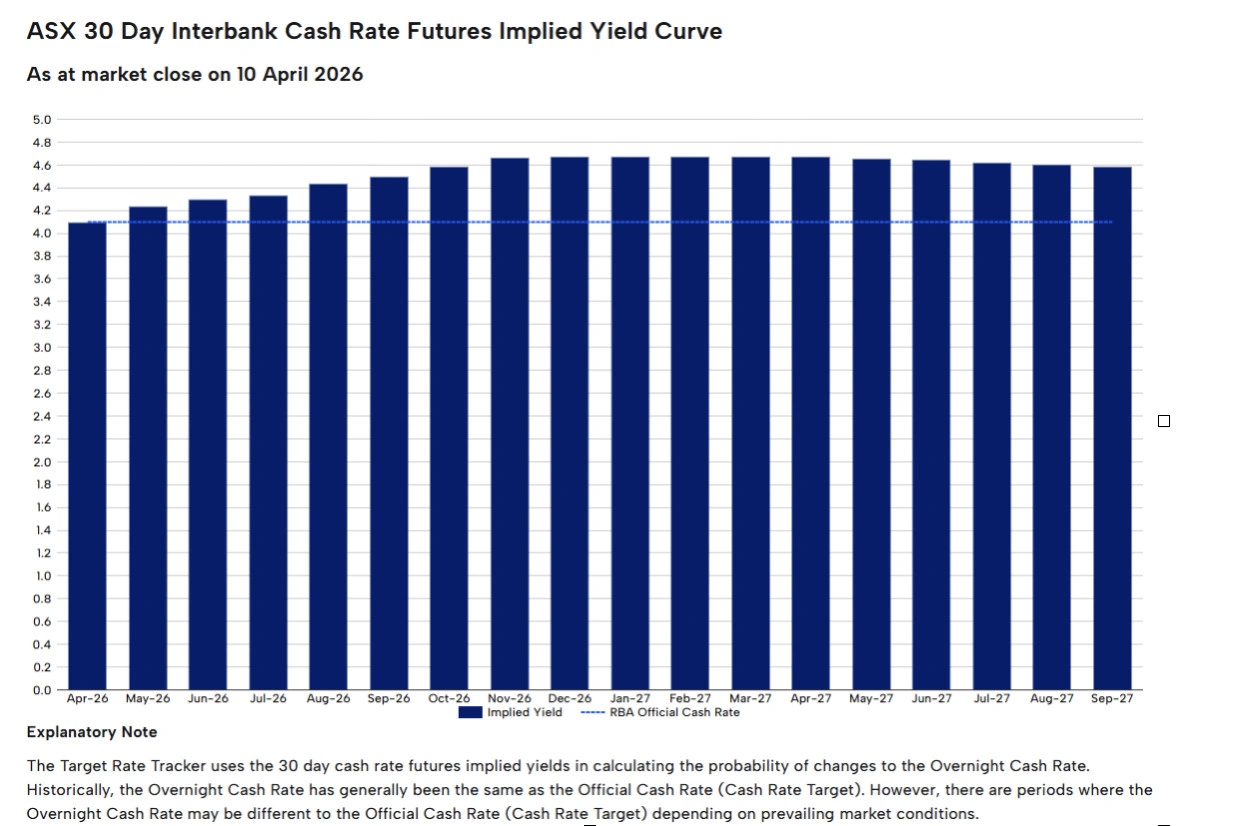
- For now, there is likely to be a pause in reducing global cash rates and ongoing market volatility across all markets is likely to continue. In Australia, markets currently suggest the rate rises are not finished yet, and price in another 3 rises by the end of the year.
- Diversification continues to be essential. Maintaining a balance between domestic and global exposures remains a prudent approach as 2026 unfolds. Entering new investment positions are best approached using a dollar-cost averaging approach and rebalancing as pricing opportunities arise continues to be appropriate for established portfolios.
Major Market Indicators
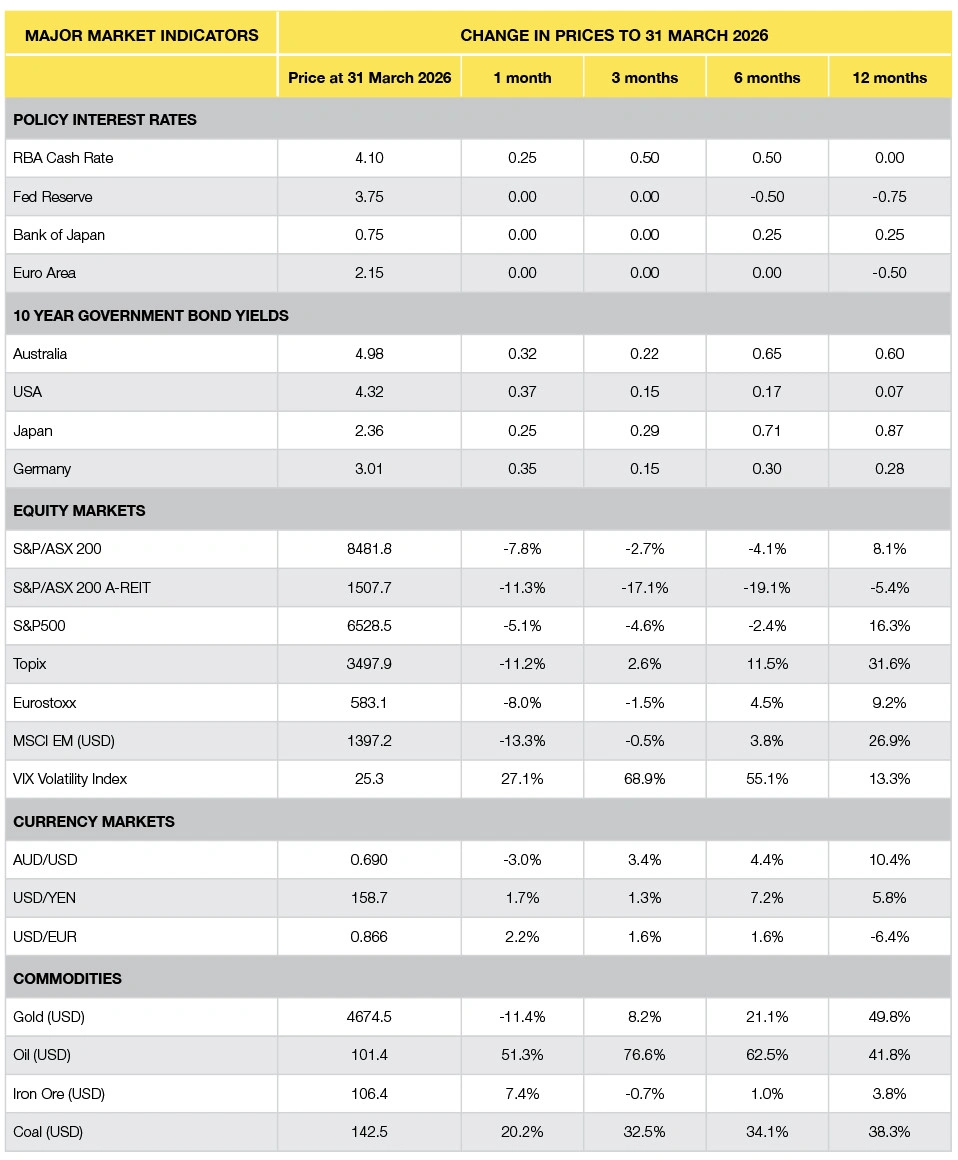
Source: Morningstar, Trading Economics, Reserve Bank of Australia
Market Expectations of Future RBA Cash Rates
Following the Iran attack, Australian Cash rates are expected to go even higher than previously expected:
USA still on the high side of valautions … although has dropped significantly!
Published:
Share


Resources
A wealth of knowledge
Latest News
-
Tax Time ATO Scams & The 31 October Deadline
 September 29, 2026
-
Estate Planning in Australia: A Simple 4-Part Guide
September 29, 2026
-
RBA Rate Rise September 2026: What Investors Need to Know
September 22, 2026
-
Income Protection for FIFO Workers: 6 Things to Check
September 22, 2026
-
Discover How to Hand Over a Business to Family
September 15, 2026
-
Economic Snapshot – August 2026
September 15, 2026

Tools & Guides
Useful tools & guides to get you started
 Find out more

Video Guides
Useful videos to get you started
Find out more

Financial Calculators
See what impact little changes can have
Find out more