
Where Is My Money Going? How to Track Spending In 5 Steps
Here’s the good news: your money isn’t vanishing into a black hole. It’s going somewhere very specific, and you can find out exactly where in about twenty minutes. Learning how to track spending is one of the highest-value financial habits you can build, and it doesn’t require a spreadsheet the size of a small novel.

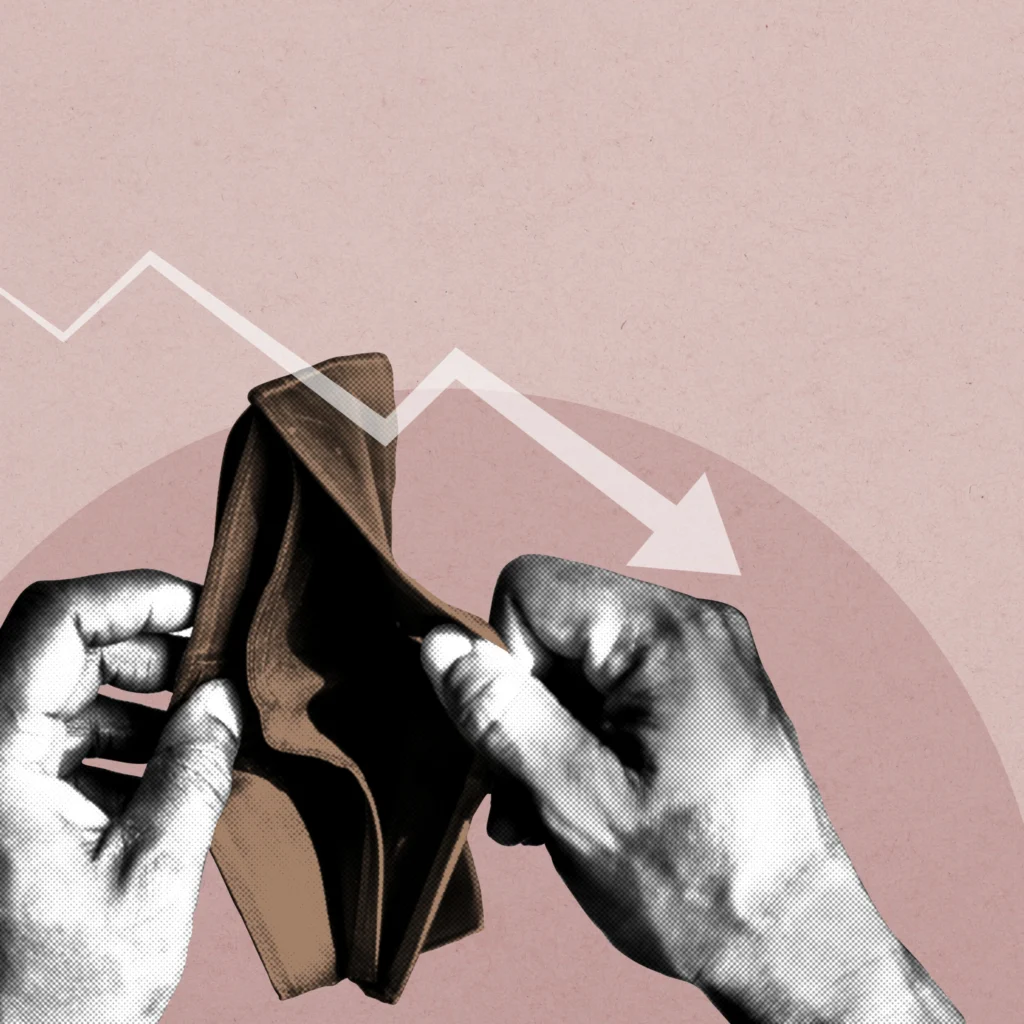
You get paid on Thursday. By the following Tuesday, you’re standing in the kitchen asking the great Australian question: where on earth is my money going?
You haven’t bought a boat. You haven’t taken up competitive antique collecting. And yet, somehow, the money has simply… left.
Here’s the good news: your money isn’t vanishing into a black hole. It’s going somewhere very specific, and you can find out exactly where in about twenty minutes. Learning how to track spending is one of the highest-value financial habits you can build, and it doesn’t require a spreadsheet the size of a small novel.
Let’s have a look at where the money actually goes, how to catch it in the act, and what to do once you know.
Table of Contents
You Need A Spending Tracker System
Most people we meet at HPartners aren’t reckless. They’re not blowing the mortgage on late-night online shopping (well, mostly). They’re just running on vibes – a rough mental sense of what they spend, which turns out to be about as reliable as a Brisbane weather forecast in November.
Research into spending behaviour consistently shows that people underestimate what they spend, especially in small, frequent categories. It’s not a character flaw; it’s how brains work. We remember the $2,400 holiday flights. We do not remember the forty-three separate transactions at the same bakery.
This is where behavioural finance gets interesting. The gap between what you think you spend and what you actually spend is where financial stress quietly grows. Tracking closes that gap, and closing that gap is what turns “I hope this works out” into “I know exactly what I’m doing.” (If you find the psychology of money fascinating, our behavioural finance work digs into exactly this.)
Where Your Money is Probably Going
Before you learn how to track spending, it helps to know what you’re looking for. In our experience, the money tends to disappear in four fairly predictable ways.
1. Subscription creep
The modern household is a subscription buffet: streaming services, music, cloud storage, a meditation app you downloaded during a stressful week in 2023, a gym membership you use “seasonally”.
Individually, they’re small. Collectively, they’re a car service. Subscriptions are dangerous precisely because they’re designed to be forgettable – that’s the business model.
2. The convenience tax
Food delivery, parking apps, coffee, the servo pie, the “I’m too tired to cook” Thai order. None of these are morally wrong. Life is short and pad see ew is delicious. But the convenience tax is a genuine budget line item for most households, and it’s almost always bigger than people expect.
3. Lifestyle inflation
You get a pay rise. Six months later, your bank balance is exactly where it was. This is lifestyle inflation – spending quietly expanding to fill whatever income is available.
It’s the single biggest reason high earners can still feel broke. If you’ve had a promotion recently, this one’s worth a hard look. It’s a common theme for professionals we work with.
4. Interest and fees
Credit card interest, buy-now-pay-later fees, account fees, insurance premiums you’ve never renegotiated. This is money leaving your account and buying you precisely nothing. It’s the most fixable category and the most ignored. Our debt management guidance often starts right here.

How to Track Spending: A Five-Step Method
Step 1: Pick your last three months
Grab three months of bank and credit card statements. Not one month, and definitely not your most virtuous month. Three months smooths out the weird stuff (the birthdays, the car rego, the dental bill) and gives you a picture of real life, not aspirational life.
Most Australian banks let you export transactions to CSV in a couple of clicks.
Step 2: Categorise ruthlessly
Sort every transaction into simple buckets. You don’t need forty categories. You need about eight:
- Home — rent or mortgage, rates, insurance
- Utilities — power, water, internet, phone
- Groceries
- Transport — fuel, rego, public transport, tolls
- Eating out and takeaway
- Subscriptions and memberships
- Debt repayments and fees
- Fun money — clothes, hobbies, gifts, the good stuff
The magic here is honesty. If you put your Friday night dinners under “groceries” because it makes the number look better, you are only lying to yourself – and yourself has access to the bank account.
Step 3: Use a tool so you don’t have to use willpower
Willpower is a terrible budgeting system. Tools are better. You have three solid options:
- The free government tool. ASIC’s Moneysmart Budget Planner is genuinely excellent, free of charge and free of anyone trying to sell you something. It’s the best starting point for most Australians.
- An app. Thanks to Australia’s Consumer Data Right (open banking), budgeting apps can now securely connect to your accounts and categorise spending automatically. Frankly, this is a small miracle compared to how it used to work.
- A spreadsheet. If you’re a spreadsheet person, you already know you’re a spreadsheet person. Go forth.
Whichever you pick, the rule is the same: automate the boring part, so the only thing you have to do is look.
Step 4: Find your three leaks
Once you can see three months of categorised spending, don’t try to fix everything. That’s a great way to fix nothing.
Instead, find three leaks. A leak is money leaving your account that gives you very little joy or value in return. Typically it’s the phone plan you haven’t reviewed since the Rudd government, two subscriptions you’d forgotten about, and a bank fee that has no business existing.
Fix three. Bank the savings. Feel smug. Repeat next quarter.
Step 5: Give every dollar a job
Tracking tells you what happened. Cashflow planning tells you what happens next, and that’s where the real gains are.
The simplest version: split your income across four accounts.
- Bills — everything fixed, paid by direct debit, so you never think about it
- Spending — the money you’re genuinely free to spend, guilt-free
- Savings — automated on payday, before you can talk yourself out of it
- Goals — house deposit, holiday, the emergency fund that helps you sleep at night
Automation beats discipline every single time. The goal isn’t to spend less on everything; it’s to spend deliberately on the things you actually care about and stop leaking money on the things you don’t.
“But I hate budgeting” we hear you cry. Fair enough. Nobody’s first love is a spending tracker spreadsheet.
But, tracking your spending isn’t about restriction. It’s about permission. When you know exactly what’s coming in, what’s going out and what’s already accounted for, you get to spend the leftover money without guilt, because you know it’s genuinely yours to spend.
That’s not deprivation. That’s freedom with better admin.
And the flow-on effects are real. Households with a clear view of their cashflow borrow more confidently, save more consistently, and make faster decisions when opportunities appear, whether that’s buying a home, starting a family, or finally making a serious dent in the mortgage.
What Tracking Sets You up For
Once you know where your money is going, some very good doors open:
- Debt gets a deadline. Spare capacity you didn’t know you had becomes an extra repayment, and suddenly the loan term shrinks.
- Super gets a boost. Even modest, consistent salary sacrifice contributions compound powerfully over a career. Money you didn’t miss becomes money you’ll be delighted to find later.
- Investing becomes possible. You can’t invest a surplus you can’t identify. Tracking finds the surplus. Our investment planning team helps put it to work.
- Emergencies stop being disasters. A three-month buffer changes a burst hot water system from a catastrophe into an inconvenience.
- Goals stop being vague. “I’d like to buy a place one day” becomes “I need $X by March 2029, and here’s the monthly number.” That’s the whole game.
You can see how small changes stack up over time with our financial calculators — it’s oddly addictive.
A Quick Reality Check
Learning how to track spending will not, on its own, fix a genuine income shortfall. If the numbers simply don’t add up (and for plenty of Australian households right now, that’s the honest situation) no amount of colour-coded categories will change the maths.
What tracking does do is give you accurate information, fast. And accurate information is what lets you (and your adviser) make the real decisions: restructure debt, review insurance, change your tax structure, adjust your goals, or find income you didn’t know you had.
You can’t manage what you can’t measure. But once you can measure it, you can manage almost anything.
Ready to Find Out Where Your Money is Going?
Learning how to track spending is step one. Building a plan around it is where things get genuinely exciting.
At HPartners, our Brisbane and Toowoomba team helps Australians turn “where did it all go?” into “here’s exactly where it’s going, and why.” We’ll help you build a cashflow and budgeting plan and spending tracker that fits your real life, not a theoretical one, and we’ll do it without judgement or a lecture about your coffee habit.
Book an appointment or talk to a human on 1300 656 260.
Let’s make life easier, together.
Any advice is general in nature only and has been prepared without considering your needs, objectives or financial situation. Before acting on it, you should consider its appropriateness for you, having regard to those factors. Before making any decision about whether to acquire a financial product, you should obtain the Product Disclosure Statement.
Published:
Share


Resources
A wealth of knowledge
Latest News
-
How to Budget on an Irregular Income in 6 Steps
 October 20, 2026
-
Start Paying Off a Mortgage Faster in 7 Easy Steps
October 13, 2026
-
Economic Snapshot – September 2026
October 13, 2026
-
Brisbane Property Slump: What It Means
October 6, 2026
-
Christmas Party Tax 2026: What Businesses Should Know
October 6, 2026
-
Tax Time ATO Scams & The 31 October Deadline
September 29, 2026

Tools & Guides
Useful tools & guides to get you started
 Find out more

Video Guides
Useful videos to get you started
Find out more

Financial Calculators
See what impact little changes can have
Find out more