

Economic Snapshot – September 2026
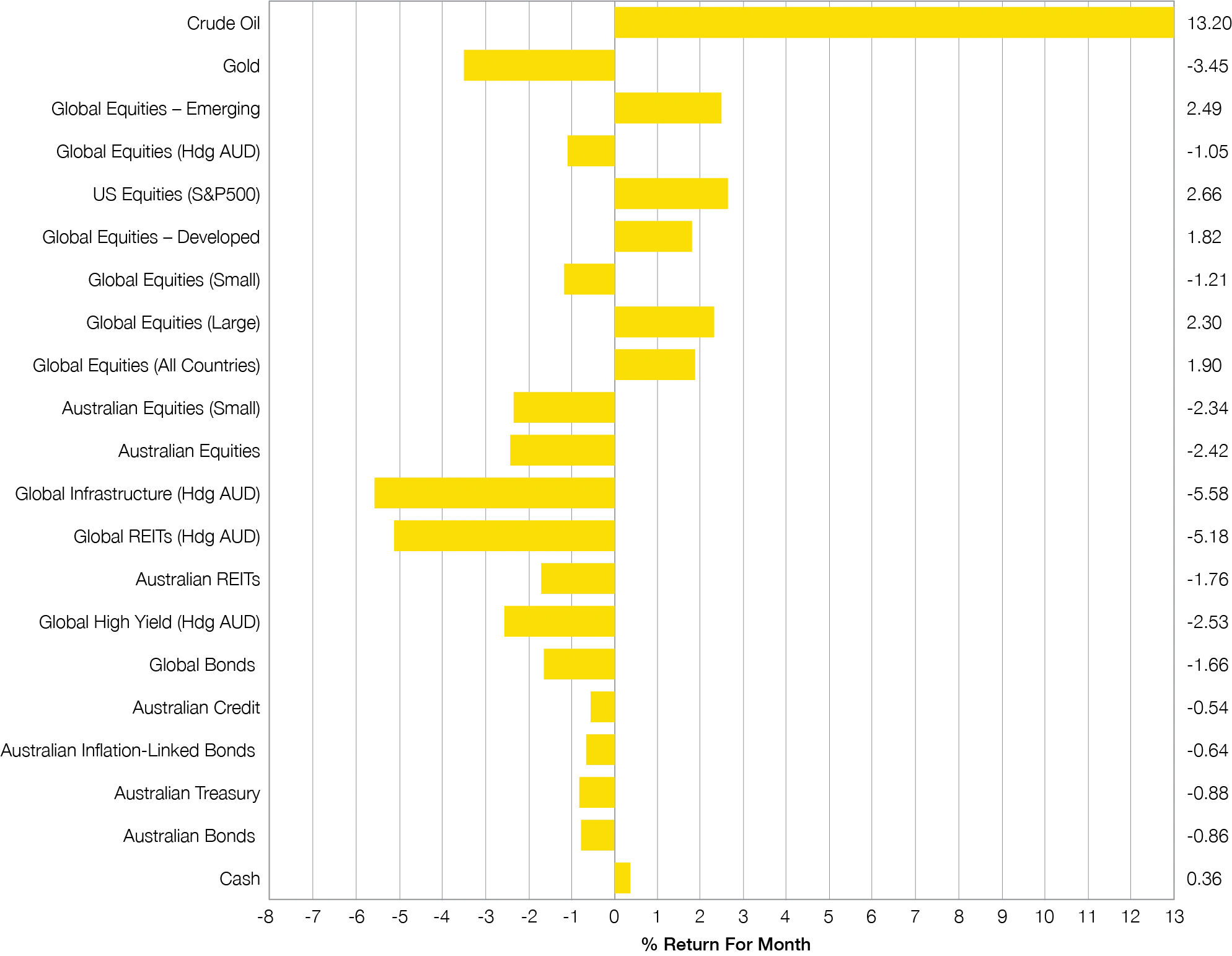
The best performing asset class (aside from energy) in September was Emerging Markets which was up a reasonable 2.5%.

This September economic snapshot article is prepared by Michael Furey, Principal of Delta Research & Advisory, on behalf of the HPartners Group.
Summary
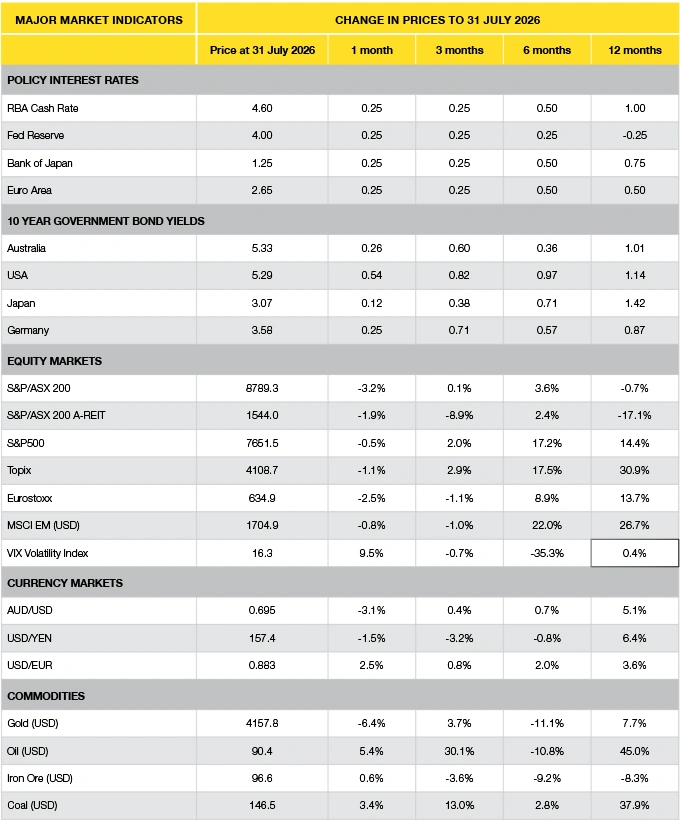
- The continuing Iran War has maintained high energy prices, feeding high inflation, and in September all major western economies increased cash rates by 25bps, including Australia. The big news was the much higher bond yields, which means high levels of government debt is being funded at their highest levels for around 15 years. These high bond yields fed into weaker sharemarkets as valuation hurdles became just a little bit higher.
- The best performing asset class (aside from energy) in September was Emerging Markets which was up a reasonable 2.5%. Whilst US sharemarkets declined a little during September, when converted back to Australian dollars, it also ended up over 2% as the Australian dollar declined by over 3%.
- Economically, inflation persists at higher than desired levels, unemployment remains relatively low but the persistent inflation and higher cash rates suggest economic weakness is very possible over the next 12 months.
- Our core investment message remains due to persistent downside risks from high sharemarket valuations in USA and the energy crisis. This means disciplined risk management rather than aggressive position changes. Shares continue to offer an attractive risk premium in specific markets, as do conservative bonds, but returns may be challenged from occasional short-term volatility. Avoiding panic (selling) decisions continues to be a crucial investment issue today for long-term investors.
Chart 1
Higher bond yields… weak sharemarkets and even weaker real asset returns.
What Happened Last Month?
Markets & Economy
- September was a similar month to August insofar that bond yields are the primary news and much much higher; but this time across all terms and not just 30 years … yields have increased from cash to 10 years to 30 years, as the higher energy prices continued the higher for longer inflation theme.Central banks increased rates by 25bps across USA, Australia, Europe, and Japan during September. In the USA this was seen as a positive, particularly as the new governor showed he is not doing what Trump wants (and Trump wants a rate decrease) and is focusing on keeping inflation manageable.
- The higher yields resulted in weak sharemarkets with many negative returns as the higher yields increased the valuation hurdle for all assets. The Australian market performed poorly (down 2.4%) and this was also driven by very weak consumer sentiment, concerns about the economy, thereby resulting in significant weakness in sectors such as consumer discretionary (e.g. Wesfarmers). Whilst Australia’s tech sector also declined significantly, a few AI-aligned stocks helped the US market almost breakeven but fortunately the weak Australian dollar (down over 3%) meant investors had positive global returns.
- Economic growth around the world is slightly positive but not helped by the inflationary situation and continued tariff war. However, unemployment continues at low levels which augurs well for the economy but also keeps upward pressure on inflation and future central bank
Outlook
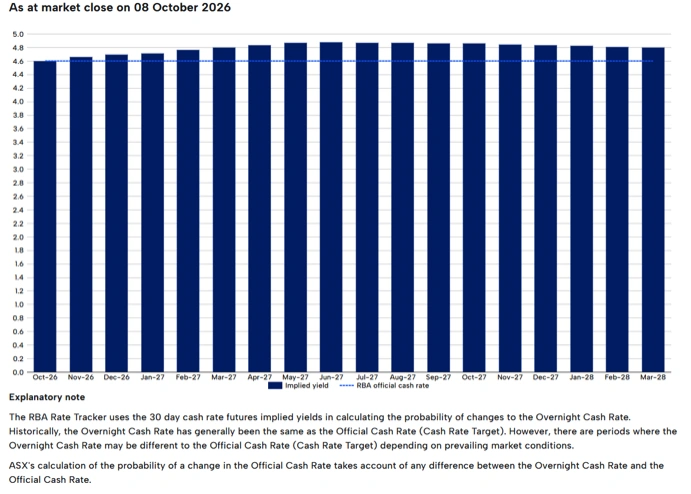
- The continuation of higher inflation in Australia keeps a strong likelihood of more rate increases as markets price up to 2 more … this is a significant change from recent months as markets envisage higher inflation for longer than previously anticipated.
- Bond yields around the world have also continued to increase and expected returns for fixed interest are also consolidating at over 5%pa over the next 5-10 years. These expected returns are at their highest levels for many years.
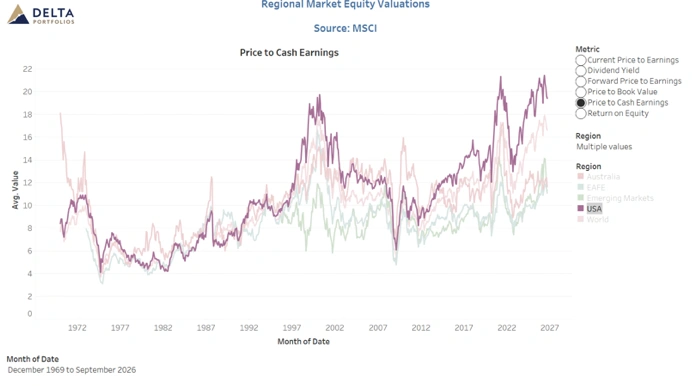
- At the risk of crying wolf, US markets continue near record high valuations and are forecast to be weaker than non-USA sharemarkets over the next 10 years. As previously mentioned, this doesn’t mean any imminent crash is likely, and returns may continue to be good over the short-term, particularly whilst the AI capex has a long time to go yet, but caution should always be appropriate with expensive markets.
- Our core message remains as we continue to believe portfolios should be underweight USA shares and high yield (junk) bonds due to these near record high valuations. By comparison, defensive Cash and bond portfolios both global and in Australia, are providing strong relative expected returns at over 5%pa.
- Our current beliefs are that new investors should dollar cost average into sharemarkets and long-term investors should stay invested for the long-term but should expect and get used to higher volatility.
- Diversification continues to be essential. Maintaining a balance between domestic and global exposures remains a prudent approach as 2026 unfolds. Rebalancing as pricing opportunities arise also continues to be appropriate for established portfolios.
Major Market Indicators
Source: Morningstar, Trading Economics, Reserve Bank of Australia
30 Sept Market Valuations Since 1969 – Price to Cash Earnings: Improvement in USA But Still High
Rising Cash Rate Expectations by The Australian Market: Pricing in 1 More Rise
Published:
Share


Resources
A wealth of knowledge
Latest News
-
Start Paying Off a Mortgage Faster in 7 Easy Steps
 October 13, 2026
-
Economic Snapshot – September 2026
October 13, 2026
-
Brisbane Property Slump: What It Means
October 6, 2026
-
Christmas Party Tax 2026: What Businesses Should Know
October 6, 2026
-
Tax Time ATO Scams & The 31 October Deadline
September 29, 2026
-
Estate Planning in Australia: A Simple 4-Part Guide
September 29, 2026

Tools & Guides
Useful tools & guides to get you started
 Find out more

Video Guides
Useful videos to get you started
Find out more

Financial Calculators
See what impact little changes can have
Find out more