

The Real Cost of Early Super Withdrawal for Dental or a Home Deposit
The numbers here are eye-opening. Australians withdrew more than $817.6 million from their super funds for dental treatment alone in the last financial year, and that figure is climbing fast.

We get it. Life is expensive. Sometimes your teeth need urgent work, or that first home feels just out of reach, and your superannuation balance is sitting right there, looking very tempting.
But before you log into myGov and start filling out forms, it’s worth asking yourself a serious question: what will early super withdrawal actually cost me in the long run? Because dipping into your super early isn’t free money. Far from it.
A withdrawal today can quietly rob you of tens of thousands of dollars by the time you retire, and in some cases, even put you at risk of being caught up in dodgy schemes pushed by unscrupulous dental clinics and medical providers.
Here’s what every Australian should understand before withdrawing super for dental treatment or a home loan deposit.
Table of Contents
What Is Early Super Withdrawal?
Your superannuation is designed to be a long-term investment – money that compounds and grows over decades, then supports you in retirement. In most cases, you can’t access it until you’re 60 or older.
But there are a handful of situations where the Australian Taxation Office (ATO) will allow you to access your super earlier, under what’s known as compassionate grounds or specific government schemes.
The two most common scenarios people ask about are:
- Dental treatment (and other medical needs) — via compassionate grounds release
- Buying your first home — via the First Home Super Saver (FHSS) scheme
Both are legitimate pathways. But both come with rules, limitations, and risks that are easy to overlook when you’re in a tight spot.

Withdrawing Super for Dental Treatment
How Does It Work?
Under the ATO’s compassionate grounds provisions, you may be able to access super early to cover medical or dental treatment costs — for yourself or a dependant — if that treatment is necessary to alleviate acute or chronic pain, treat a life-threatening condition, or address a serious mental illness.
It’s not a quick or simple process. Generally, you’ll need sign-off from two medical or dental practitioners confirming the treatment meets the criteria. Applications are submitted through myGov and are assessed by the ATO, who have the final say.
The Rising Tide of Dental Withdrawals
The numbers here are eye-opening. Australians withdrew more than $817.6 million from their super funds for dental treatment alone in the last financial year, and that figure is climbing fast. The ATO received 47,630 applications for early release of super to fund dental treatment last financial year, compared to just under 32,000 applications the year before. That’s a significant jump in a very short time.
What Will It Cost You?
This is the part most people don’t want to hear. The ATO has been very clear on what early withdrawal really means for your financial future:
- Withdraw $10,000 today → up to $40,000 less at retirement
- Withdraw $20,000 today → up to $80,000 less at retirement
That’s the power of compound returns working against you. Money left in super doesn’t just sit still, it grows. Taking it out early doesn’t just cost you the amount you withdrew; it costs you everything that money would have earned over the next 20, 30, or even 40 years.
And there’s another catch: withdrawing super for dental treatment may also reduce any insurance cover linked to your super account, which could leave you exposed at exactly the wrong time.
Watch Out for Dodgy Operators
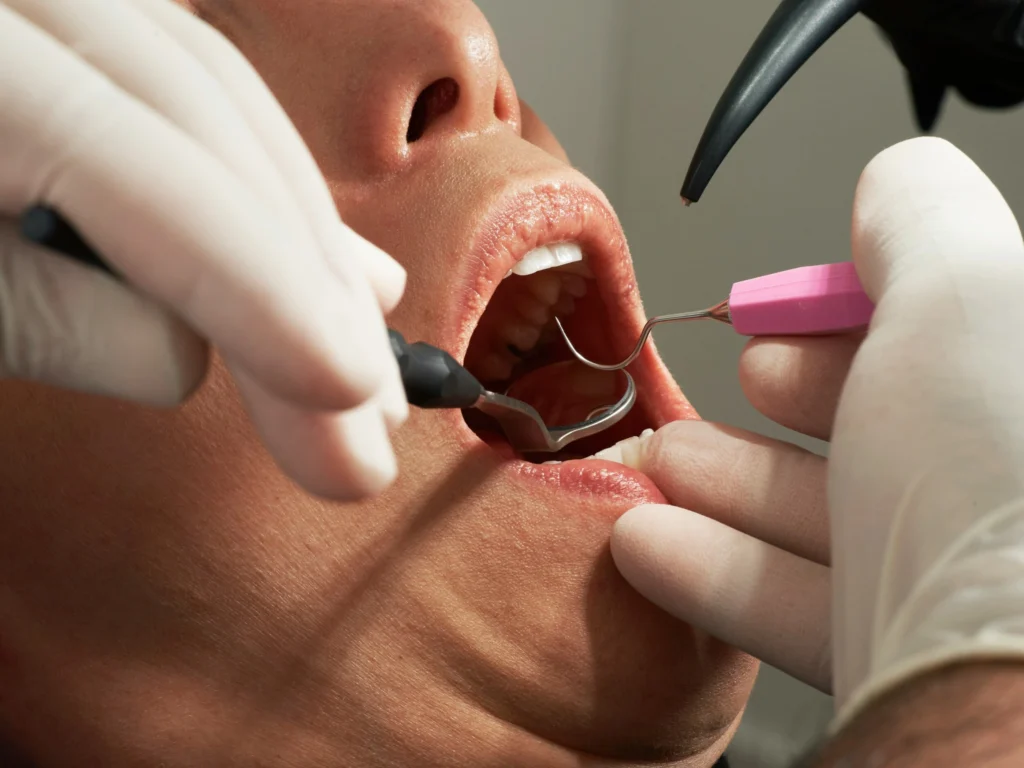
Here’s something you might not expect: some dental and medical clinics are actively encouraging patients into withdrawing super for dental treatment, and not always with your best interests in mind.
Regulators say some medical practitioners have been using social media to promote early access to super for procedures including dental work, IVF, and bariatric surgery, despite concerns patients may be sacrificing tens of thousands of dollars in future retirement savings.
Some dentists have also been found charging fees to assist patients with preparing ATO documents, despite not being registered tax agents. Others have been caught making inaccurate statements in medical reports or even asking patients for their myGov login details so they can lodge applications on their behalf – something the ATO has flagged as deeply concerning.
The red flags to watch for include:
- Being pressured to access super quickly
- A provider offering to help lodge your ATO application (for a fee or otherwise)
- Claims that treatment is effectively “free” because it’s paid by super
- Anyone asking for your myGov username or password
As ATO Deputy Commissioner Ben Kelly has stated, it is “unacceptable for anyone to pressure Australians into accessing their retirement savings early to pay for overpriced or unnecessary treatments.”
Is There a Better Option?
Before going down the super route, it’s worth exploring alternatives:
- Payment plans directly with your dental practice
- Medicare and private health insurance — check exactly what you’re covered for
- Personal loans — the interest may be less costly than the long-term super hit
- Public dental services — wait times can be long, but they exist
If you genuinely need the treatment and have no other options, accessing super compassionately may still be the right call. The key is making that decision with full information, not because a clinic talked you into it.
Using Super to Buy Your First Home: The FHSS Scheme
How Does the First Home Super Saver Scheme Work?
The First Home Super Saver scheme (FHSS) is a government initiative designed to help first home buyers save for a deposit inside their super fund (where returns are generally higher and tax is concessional) before withdrawing it when the time comes to buy.
Here’s a quick summary of how it works:
- You make voluntary contributions to your super (on top of the compulsory employer contributions) — either pre-tax (salary sacrifice) or after-tax
- These contributions are taxed at just 15% inside super, which is often much lower than your marginal income tax rate
- When you’re ready to buy, you can apply to the ATO to release those voluntary contributions (plus associated earnings)
- As of the current rules, you can release up to $15,000 per financial year you’ve contributed, with a total cap of $50,000

What Are the Risks and Limitations?
The First Home Super Saver scheme is genuinely useful for many first home buyers, but it comes with a few important caveats.
It only includes voluntary contributions. Your employer’s compulsory contributions (the Super Guarantee payments) cannot be released under the FHSS. Only money you’ve actively chosen to put in counts.
You need to plan ahead. You can’t just decide to use it at the last minute. You need to have made those voluntary contributions first, which means forward planning is essential. This is one of those strategies that really pays off when you start early.
The withdrawal is still taxed. When you access your FHSS funds, the money is included in your assessable income for that year, taxed at your marginal rate, minus a 30% offset. So it’s not completely tax-free, but it’s typically still advantageous compared to saving outside of super.
You’re still reducing your retirement balance. Just like compassionate withdrawals, taking money out under the FHSS means that money isn’t sitting there growing for your retirement. For most people, buying a home is a worthwhile trade-off (property is itself an asset) but it’s worth understanding the full picture.
There are eligibility requirements. You need to be a genuine first home buyer (you can’t have previously owned property in Australia), you must intend to live in the property, and you’ll need an FHSS determination from the ATO before signing a contract.
Is the FHSS Right for You?
For some people, absolutely. If you’re currently renting and saving hard for a deposit, the FHSS scheme can meaningfully accelerate your timeline, especially if you’re a higher income earner who benefits more from the tax savings inside super.
But it’s not a one-size-fits-all solution. The interaction between super contributions, your income tax position, your timeline to purchase, and your retirement goals is genuinely complex. Getting this wrong can be costly, which is why talking to a financial adviser before you start making voluntary contributions is one of the smartest moves you can make.
Our Buying a Home life stage page walks through more of the considerations involved in your property journey, including how to make sure the way you structure your finances today sets you up for the best possible outcome.
What Early Withdrawal Really Means for Retirement
Whether it’s a dental procedure or a home deposit, the core issue is the same: money taken out of super today is money that isn’t compounding for your future.
Superannuation is one of the most tax-effective wealth-building tools Australians have access to. The earnings inside super are taxed at just 15% during the accumulation phase (and zero in retirement phase for most people). Over a working life, the difference between a well-managed super balance and one that’s been repeatedly drawn on can be hundreds of thousands of dollars.
This doesn’t mean early access is always the wrong call. Sometimes it absolutely makes sense. But the decision deserves careful thought, not a split-second reaction to a cash flow crunch, and definitely not a response to a persuasive advertisement from a dental clinic.
If you’re thinking about your retirement outlook more broadly, our Pre-Retirement & Retirement page is a great starting point for understanding what a comfortable retirement looks like and how to work towards it.
Early Super Withdrawal: A Quick Comparison
| Compassionate Release (Medical/Dental) | First Home Super Saver Scheme | |
|---|---|---|
| Purpose | Urgent medical/dental treatment | First home deposit |
| Who approves it? | ATO | ATO |
| What can be released? | Amount needed for treatment (ATO assessed) | Up to $50,000 in voluntary contributions |
| Tax on withdrawal | 17–22% if under 60 | Marginal rate minus 30% offset |
| Key risk | Significant long-term retirement impact | Reduces super balance; strict eligibility rules |
| Best for | Genuine medical need with no other options | First home buyers with a savings plan in place |
What to Do Before You Touch Your Super
Regardless of the reason you’re considering early access, here’s a sensible checklist before you do anything:
- Get independent financial advice. Not from the dentist or the real estate agent — from a licensed financial adviser who is legally required to act in your interest.
- Understand the full long-term cost. Use the ATO’s online tools or speak with an adviser to model what the withdrawal will actually cost you at retirement.
- Explore all your alternatives first. There are often other options that feel less convenient in the short term but are far better for your wealth in the long run.
- Watch out for conflicts of interest. If someone is encouraging you to access your super for a service they’re providing, that’s a red flag worth taking seriously.
- Check your eligibility carefully. Both compassionate grounds and the FHSS have specific criteria. Applying without meeting them is a waste of time at best, and at worst could trigger ATO scrutiny.
Ready to Make a Plan?
Your super is one of your most valuable financial assets, and decisions about it deserve more than a five-minute Google search.
At HPartners, we work with Australians at every stage of life to make sure their financial decisions today support the life they want in the future. Whether you’re weighing up early super access, planning your path to homeownership, or just trying to get a clearer picture of where you stand, we’d love to help.
Book a no-obligation conversation with our team →
Or explore more about how we can help you at different stages of your financial journey:
- Starting Out — building strong foundations
- Buying a Home — navigating your property journey
- Financial Planning Services — a clear strategy for your money
Any advice is general in nature only and has been prepared without considering your needs, objectives or financial situation. Before acting on it, you should consider its appropriateness for you, having regard to those factors. Before making any decision about whether to acquire a financial product, you should obtain the Product Disclosure Statement.
Published:
Share


Resources
A wealth of knowledge
Latest News
-
Brisbane Property Slump: What It Means
 October 6, 2026
-
Christmas Party Tax 2026: What Businesses Should Know
October 6, 2026
-
Tax Time ATO Scams & The 31 October Deadline
September 29, 2026
-
Estate Planning in Australia: A Simple 4-Part Guide
September 29, 2026
-
RBA Rate Rise September 2026: What Investors Need to Know
September 22, 2026
-
Income Protection for FIFO Workers: 6 Things to Check
September 22, 2026

Tools & Guides
Useful tools & guides to get you started
 Find out more

Video Guides
Useful videos to get you started
Find out more

Financial Calculators
See what impact little changes can have
Find out more